Dictionaries sit on our shelves, open on our computers, and downloaded onto our phones. We turn to them to decipher meanings and pronunciations, synonyms and etymologies, though we’ll seldom stop to contemplate them beyond their immediate use. Most of us, at least. Dr. Beth Young, on the other hand, has spent much of her academic career investigating dictionaries and recruiting undergraduate researchers along for the ride.
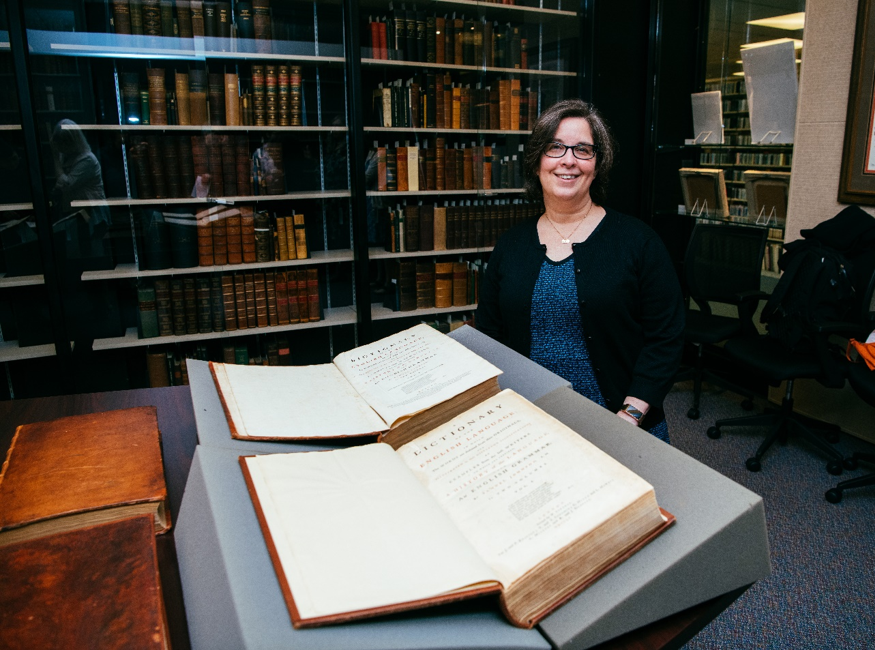
In May 2016, she brought an ongoing dictionary transcription project to the UCF’s Center for Humanities & Digital Research. The project centered on the transcription of Johnson’s Dictionary—the most comprehensive dictionary of its era, renowned for its coverage of an unparalleled range of standard written English—into an entirely online format so that the Dictionary may be accessible to anyone at any time, entirely free of cost.
In the summer of 2019, Dr. Young was awarded a grant by the National Endowment for the Humanities (NEH) to support this project to completion. The project has grown tremendously in both scope and reach, and since then, she has mentored over 300 undergraduate students similarly interested in language research.
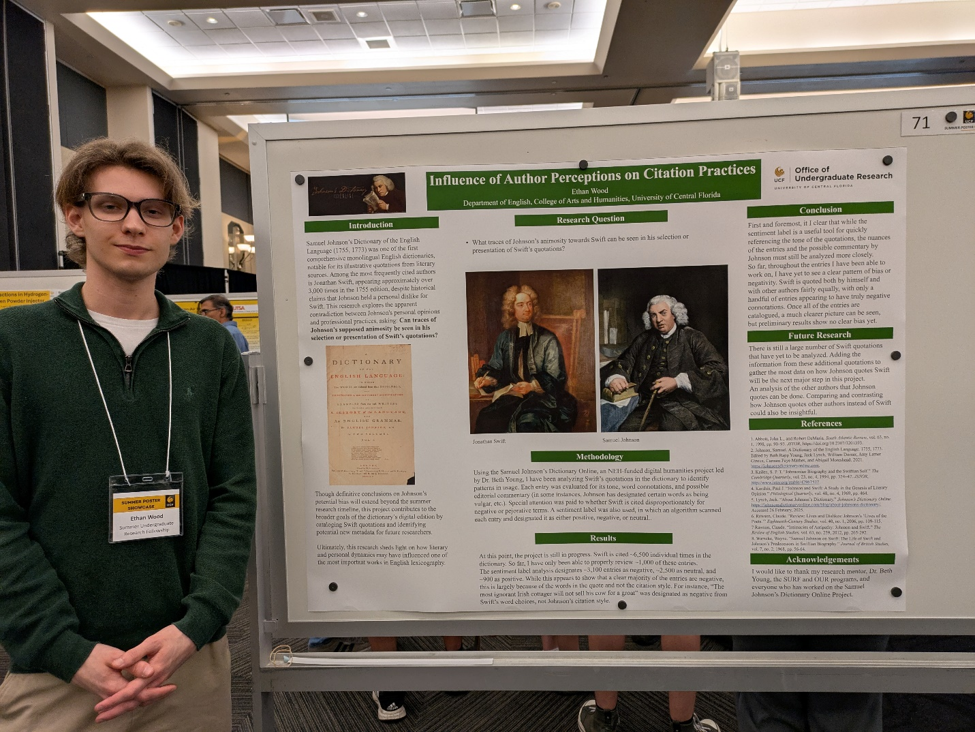
Dr. Young recruits her students through a wide range of programs, including Federal Work Study (FWS) positions, UCF’s LEAD Scholars Academic, NEH-funded assistantships, HIP scholars, independent studies, and research-integrated courses across disciplines. This is, in part, where the specialty of her mentorship lies: the accessibility of her research.
Dr. Young’s goal as a mentor is simple, to remove as many barriers as possible so that more students can meaningfully engage in humanities research. “Students long for opportunities to contribute to real scholarship, and I design project opportunities to meet that need,” Dr Young explains.
Rather than allowing this research to be reserved for honor courses or limited by the necessity of physical spaces, Dr. Young is intentional about integrating research into regular coursework. With her research taking a fully online format and requiring only a one-hour-per-week minimum, her students are able to participate regardless of work schedules, transportation constraints, or outside responsibilities. She also welcomes students no matter their prior experiences, working to remove a common barrier that often restricts research.
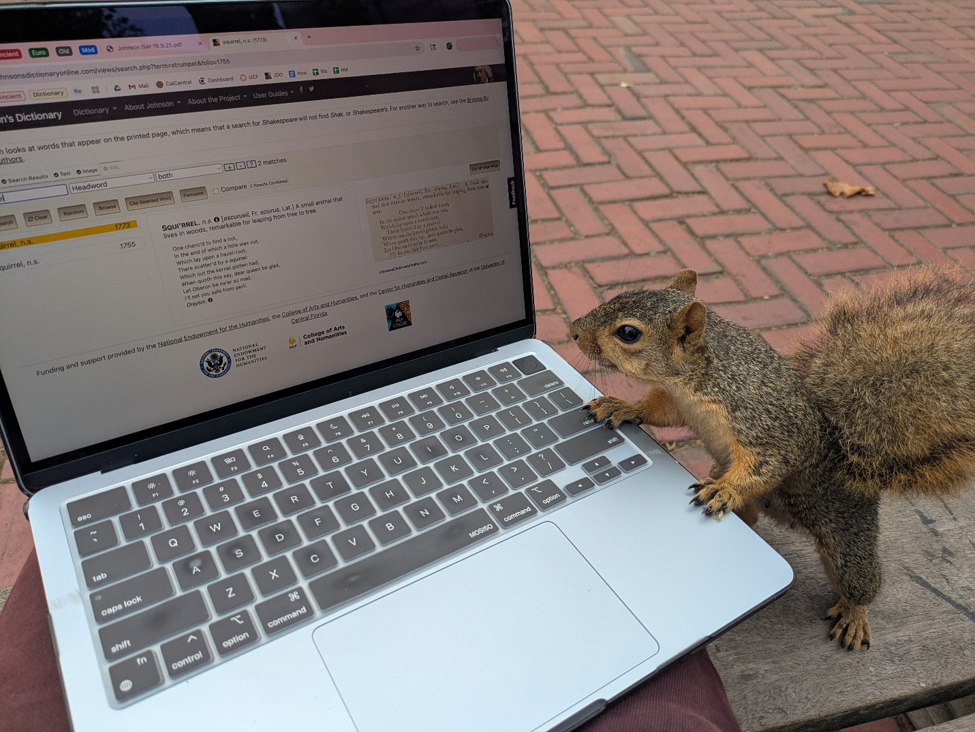
Once involved, Dr. Young’s students engage in research training, meeting with Dr. Young to discuss potential beginner tasks suited to their skillset and necessary readings to complete an orientation quiz. From there, her mentees can begin personalizing their pathway. Some students focus on XML editing, others on image processes or quotation research. Their journey and experience with the research is customizable to their interests and academic backgrounds.
Such flexibility allows students from a wide range of disciplines to find a place within the project. For example, Dr. Young describes, “Computer science students build software to facilitate research tasks; technical communication students create user guides and procedure manuals.” Others find themselves drawn to the historicity of the work, including its digital archival work or its textual analysis, areas they may not have had the chance to otherwise encounter.

For many, the experience extends beyond a single semester. Dr. Young’s students often continue their work over multiple terms, and some even remain involved after graduation, continuing as alumni. What begins as a small commitment blossoms and grows into sustained engagement, which is what undergraduate research is all about, really!
“I hope that my students will catch my enthusiasm for historical language discovery,” Dr. Young ends with, “and understand more about why humanities scholarship matters.”
Dr. Young’s Tips for Undergraduate Researchers
“UCF offers plenty of research opportunities, but you may need to seek them out. In addition to the online position announcements, try talking to your advisor, your professors, and your friends, and don’t forget to look outside your major, because interesting work usually connects to many disciplines. One opportunity can open up others. Student researchers on my project have gone on to independent studies, internships, undergraduate research fellowships, conference presentations, and beyond.”
Dr. Young’s Tips for Mentors
“Students are motivated by work that matters beyond the classroom. Even tasks that might seem tedious become more engaging when you know why they matter. Design for remote participation — it removes barriers and expands who can get involved. And start with a minimal time commitment: a lower threshold means more students try it, and the ones who thrive will take on more.”